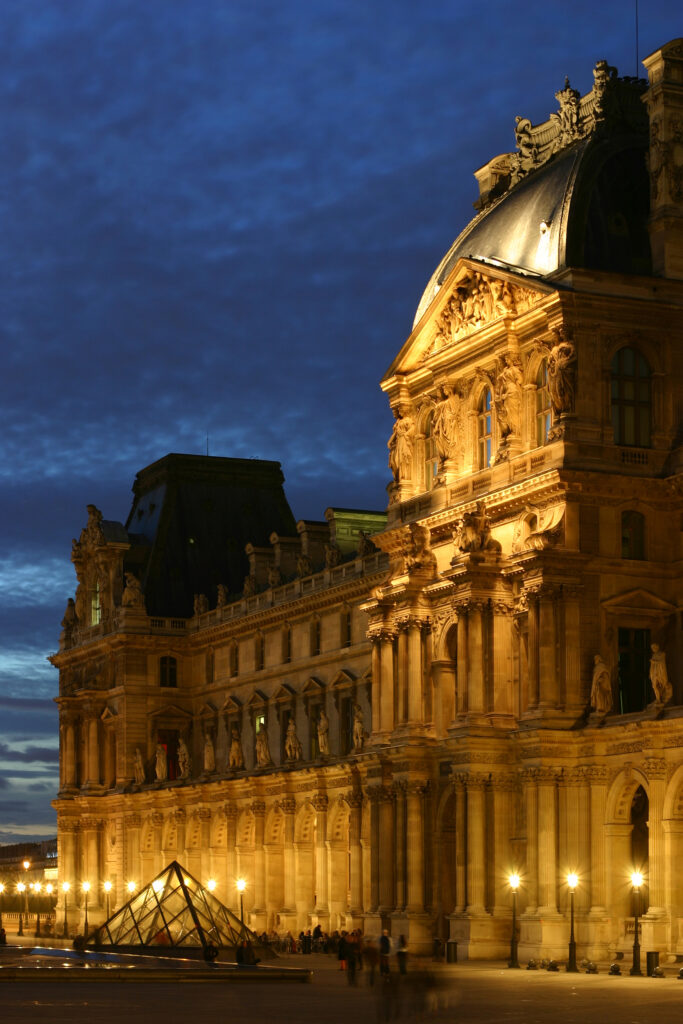
What we call authentic is often just the stubborn refusal to be reproduced. In an era of infinite digital duplication, where a Vermeer becomes a jpeg and a Ming vase becomes a 3D-printed replica by lunchtime, the premium on the genuinely old has not diminished. It has exploded. Not because we fetishize age itself, but because we are slowly learning to distinguish between what can be scaled and what cannot. A photograph of a cathedral is free. The cathedral, with its settling stones and centuries of candle smoke absorbed into limestone, is priceless. The difference is not aesthetic. It is ontological.
The Flood of the Copy
We live inside a copying machine. The technical capacity to reproduce almost anything visual, auditory, or textual has become ambient, like air. A teenager with a phone can generate a photorealistic image of a Renaissance painting that never existed. A factory in Shenzhen can produce a convincing Louis XV commode in under a week. Music, once a singular event in a room, is now a file that can be summoned anywhere, duplicated infinitely without degradation. The economist Jeremy Rifkin foresaw this decades ago in his work on the zero marginal cost society, where the cost of producing one more unit of a digital good approaches nothing. That prediction has been fulfilled and exceeded. We now live in a condition of surplus so vast that scarcity of the copy is an absurdity.
This has done strange things to value. When anything can be seen, heard, or approximated, the mere availability of an object or an experience ceases to be the point. The copy satisfies a functional need. A poster of a Rothko fills a blank wall. An AI-generated fugue in the style of Bach fills a silent room. But the function was never the totality of what those things offered. The copy is a ghost of the original, carrying its shape but not its history. It is a message without a messenger, a product without a past. The digital world is, in a sense, a world of pure surface. And surface, we are discovering, is not enough.
The art market provides a brutal demonstration. In 2023, a print of Van Gogh’s “Sunflowers” could be purchased online for under twenty dollars. The original, housed in London’s National Gallery, is insured for an amount that is functionally infinite. The print is a better reproduction than anything available a century ago; the colors are more accurate, the brushstrokes visible in high resolution. Yet no one confuses the two. The print is information. The painting is a witness. It was in Arles in 1888. It was touched by a man who would be dead within two years. The canvas fibers, the specific cadmium yellow pigment, the microscopic cracks in the oil: these are not aesthetic details. They are forensic evidence of a specific moment in the history of the human species. The copy gives you the image. The original gives you the event.
What Refuses to Scale
Certain qualities remain aggressively finite. Provenance is one. The chain of custody that links a specific object to a specific moment in time cannot be invented; it can only be documented and preserved. A chair that sat in a Bloomsbury drawing room, touched by the hands of Virginia Woolf, carries a facticity that no identical chair, however well made, can claim. The wood, the joinery, the upholstery are all secondary to the truth that this object was there.
The patina of real time is another such quality. The wear on a stone step from a million medieval feet, the darkening of a silver teapot from a century of polishing, the crack in a ceramic bowl repaired with gold in the Japanese kintsugi tradition: these are indexes of duration. They are time made visible. You cannot fake the slow accumulation of years. You can simulate it, but simulation is a lie, and the market for the authentic has a sharp nose for lies. Consider the violin. A modern luthier can produce an instrument that, in a blind listening test, many trained musicians cannot distinguish from a Stradivarius. The acoustics are reproducible. What is not reproducible is the fact that a specific Stradivarius, the “Viotti” of 1709, was played by Giovanni Battista Viotti himself, then passed through the hands of Marie Hall, and now resides in a vault, its value not in its sound alone but in its biography. A perfect copy sounds identical. It is still a copy.
Lived tradition is equally resistant to the copy-paste logic. A folk song sung by a community in a specific valley, with a specific dialect and a specific tuning that has been passed down for generations, is not the same as a studio recording of that song. The recording is a specimen. The tradition is a living ecology. When the ethnomusicologist Alan Lomax traveled through the American South in the 1930s and 1940s, he was not collecting songs. He was collecting the contexts, the voices, the rooms, the reasons. His 1941 recording of Muddy Waters at Stovall’s Plantation in Mississippi captures not just a guitar and a voice but the ambient sound of a specific room on a specific day. That room is gone. That day is gone. The tape is a relic, not just a document.
These things cannot be manufactured because they are not objects. They are relationships. A relationship with time, with a place, with a chain of human hands. A factory in Guangdong can make a million identical teacups. It cannot make one that was held by John Keats on a cold morning in Hampstead in 1819. The difference is not in the clay. It is in the history, and history is the one resource that is genuinely finite.
The qualities that resist reproduction are not mysterious. They are specific and identifiable:
– Provenance is the documented chain of ownership that connects an object to a verifiable past. The desk where Jane Austen wrote Persuasion in the house at Chawton has a provenance that no replica can share. The desk is not special wood. It is a witness. – Patina is the visible accumulation of age and use, the darkening, the wearing, the cracking that only time can produce. The bronze doors of the Florence Baptistery, cast by Lorenzo Ghiberti in the 15th century, bear a patina that is the result of six hundred years of air, rain, and human touch. A chemical treatment can mimic the color. It cannot mimic the duration. – Lived tradition is a practice carried forward by a specific community, with specific variations that are not written down but held in bodies and voices. The polyphonic singing of the Aka people of the Central African Republic is not a musical score. It is a way of being together in sound, passed from grandmother to granddaughter. A recording preserves a version of it. The tradition itself is the original, and it changes with each generation. – Custodial burden is the obligation that comes with possessing an authentic object. The owner of a 12th-century Shepard’s crofter’s cottage in the Hebrides cannot simply gut and renovate it without destroying the very thing that made it valuable. The cottage imposes a duty of care that a new-build house does not.
The Premium on the Unmanufactured
Why does the authentic command a premium? The answer is not sentimental. It is structural. A market is a mechanism for allocating scarce resources. Digital abundance has made one category of goods, copies, effectively infinite. This shifts the scarcity to another category entirely: the genuine. The genuine is scarce because time is scarce. There is only so much past. There are only so many objects that survived the 17th century, only so many paintings that were touched by a master, only so many buildings that withstood the bombs of a war. The supply is fixed and shrinking.
This fixed supply collides with a growing demand. As the world becomes more saturated with the simulated, the appetite for the real intensifies. The psychologist might call this a reaction formation. The philosopher might call it a search for grounding. The economist simply observes the price curve. A mass-produced handbag and a vintage Hermès Birkin bag perform the same function. The latter, in certain conditions, appreciates in value. The former becomes landfill. The difference is the story, the scarcity, the fact that the object has lived a life before it entered your life. The luxury market has long understood that the ultimate luxury is not gold or diamonds but time. A product that took hundreds of hours to make by a single artisan is expensive because the time of that artisan is finite and cannot be scaled. A product that is a hundred years old is even more expensive because the time is not just that of one artisan but of an entire epoch.
Authenticity commands a premium because it is the only thing that cannot be faked. A forgery can trick the eye, sometimes even the expert. The forger Han van Meegeren sold his fake Vermeers to Hermann Göring during the Nazi occupation of the Netherlands, and for years they were celebrated as masterpieces. When his fraud was revealed, the paintings did not become worthless because they were ugly. They became worthless because they were lies. The value was never in the pigment. It was in the truth of the object. This is a remarkable thing for a materialist culture to admit. It suggests that what we are really buying, when we buy a genuine artifact, is not the material but the immaterial: the truth, the history, the connection to a world that preceded us and will survive us.
The Custodial Burden
To own something genuinely old is to accept a burden. You are not an owner in the ordinary sense. You are a temporary custodian. A 16th-century oak refectory table does not belong to you. You belong to its chain of custody. You have a duty to preserve it, not just for the next owner but for the historical record. This duty is a form of moral obligation that the market does not recognize but that every serious collector understands. The Japanese concept of wabi-sabi, the beauty of imperfect and impermanent things, includes a recognition of this burden. A tea bowl with a crack is not discarded. It is repaired with gold, and the repair becomes part of the object’s history. The owner is responsible for that repair, for that continuation. The object is not a commodity. It is a lineage.
This custodianship imposes constraints. You cannot remodel a Georgian house with indifference. You cannot cut down the ancient yew tree in the churchyard because it blocks the light. The object, the building, the tree have a claim on you. They have survived wars, neglect, and the fashions of earlier centuries. Your own taste is a passing thing. The object is enduring. The responsible custodian understands this and acts with humility. The irresponsible custodian treats the object as a decoration and destroys its integrity. The difference is visible. A historic house that has been “modernized” by someone who did not understand its value is a tragic thing. Its authenticity has been chipped away, and the patina of time has been replaced by the sterility of the present. The premium is lost because the truth is lost.
The philosopher Walter Benjamin identified this dynamic in his 1935 essay “The Work of Art in the Age of Mechanical Reproduction.” He argued that the original possesses an “aura” that the copy cannot replicate. The aura is the object’s unique existence in time and space, its physical history. When you stand before the Mona Lisa in the Louvre, you are not just looking at a painting. You are in the presence of a specific panel of poplar wood that Leonardo da Vinci touched, that hung in the bathroom of Fontainebleau, that was once stolen by an Italian handyman named Vincenzo Peruggia in 1911. The reproduction gives you the smile. The original gives you the entire history of the object, including Napoleon’s bathroom and the thief’s pocket. That history is not a story you tell. It is a physical fact. The object carries it.
Heritage Beyond the Market
There is a form of wealth that resists the logic of the market entirely. It is not private but communal. The medieval cathedral in the center of a city is not for sale. The ancient woodland, the prehistoric stone circle of Stonehenge, the oral tradition of the Bedouin people: these are forms of heritage. They are valuable beyond any price because they are the soil from which culture grows. The market can value a painting by Paul Cézanne. It cannot value the sense of belonging that a person feels when they stand in a landscape that their ancestors have farmed for a thousand years. That sense is not a commodity. It is a condition of life.
The attempt to reduce heritage to a market value is a mistake. It is a category error. A mountain has no price. The Welsh language has no price. The ruins of the Roman amphitheater at Arles have no price. These things are not assets. They are foundations. They are the context within which the market operates, not items that operate within the market. When a society forgets this, when it treats everything as fungible, it loses something irreplaceable. The philosopher Michael Sandel has written extensively about the moral limits of markets, arguing that some goods are degraded when they are bought and sold. A friendship is not a market good. A family is not a market good. Heritage, too, belongs to this category. It is a form of wealth that is held in common, a trust that passes from generation to generation.
The premium on the authentic, then, is not just a price signal. It is a reminder. It tells us that in a world of infinite copies, the real still matters. The patina, the provenance, the tradition, the custodial burden: these are not luxuries. They are the anchors that hold a culture to its past. The copy is a mirror. The authentic is a window. One reflects the self. The other opens onto a world that is not us, that existed before us, that will exist after us. That is the source of its value. The market can measure the premium. But the premium itself is just the shadow of a deeper truth. The authentic is priceless, and we know it.