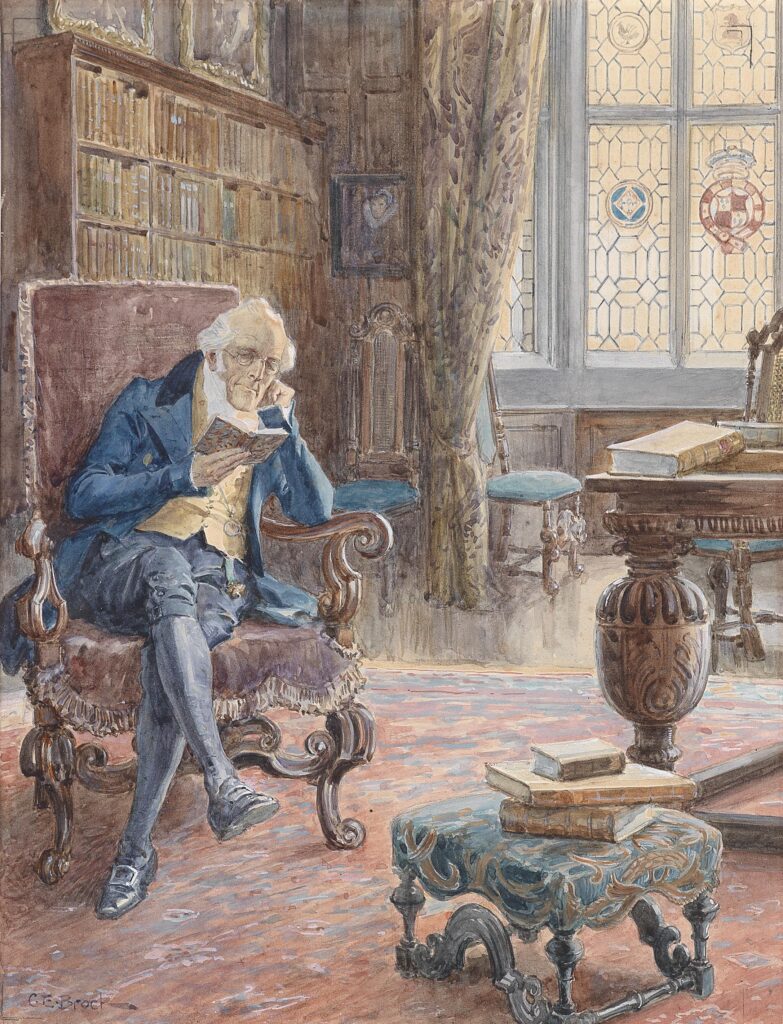
A private library is not a pile of books but a deliberate record of attention, built one choice at a time. It differs from mere ownership because selection, order, and use give it a character that a shelf of random purchases never has.
Owning Books and Forming a Library
Anyone can own books. A library begins when someone decides what belongs and what does not. The distinction is not money but intention. A reader who buys every bestseller owns books; a reader who keeps only what changed their thinking is forming a library. The shelf becomes an argument about value, made physical.
A personal collection also has a shape. It may be deep in one field and thin in others, or it may map a life across decades. That shape is visible to anyone who looks closely. Marginalia, worn spines, and duplicate copies all tell a story about how the books were used.
What Gives a Copy Standing
Not every copy of a book carries the same weight. Several factors give a single volume its standing in a collection:
– Edition: first printings, corrected states, and authorised revisions matter to scholars and collectors. – Condition: clean pages, intact binding, and original wrappers preserve both use and value. – Binding: a contemporary binding, a signed binding, or a period binding can mark a copy as historically significant. – Association: a copy owned, annotated, or inscribed by a notable reader carries a layer of human history. – Provenance: a clear ownership trail, from a known previous owner to the present, strengthens trust in the copy.
None of these factors works alone. A first edition in poor condition may be less useful than a later edition in fine state. A signed copy with no provenance can raise questions. Collectors weigh these elements together, and the best copies are those where several factors reinforce each other.
The Library as a Portrait of a Mind
A private library is often the most honest portrait of its maker. It shows what was read, reread, and kept. It also shows what was refused. Gaps are as revealing as abundance. A shelf without popular fiction may signal taste; a shelf without reference works may signal habit rather than depth.
The arrangement itself carries meaning. Some collectors order by subject, others by chronology, others by a private logic that only they understand. Notes in margins, bookmarks, and pressed flowers turn the library into a record of encounters. For researchers, such a library can be as valuable as an archive, because it preserves the context in which ideas were received.
Care: Light, Air, Handling
Books are durable but not indestructible. Light fades cloth and paper; heat and humidity warp boards and encourage mould. A stable environment, away from direct sun and radiators, serves most collections well. Good air circulation matters more than perfect temperature.
Handling is the daily test of care. Clean hands, a cradle for fragile volumes, and gentle opening of tight bindings prevent damage that cannot be reversed. Dusting with a soft brush, rather than wiping, protects surfaces. These habits are simple, but they are the difference between a library that lasts and one that quietly decays.
What Happens After the Maker
Libraries outlive their owners. Without planning, a lifetime of collecting can be dispersed in a weekend, with rare items lost among ordinary ones. The case for planning is practical as well as emotional. A maker who records what each volume is, and why it matters, gives the next custodian a chance to keep the library whole.
Planning also means deciding on a destination. A specialised collection may suit a university or museum. A general collection may serve a local library or a younger reader. Either way, the decision should be made while the maker can still explain the logic behind the shelves. A library without a plan is a library at risk; a library with one has a second life.