On 24 November 2026, a two-hour reunion at BFI Southbank in London brought together the presenters, editors and screen figures who turned commercial breakfast television into a daily British ritual. Hosted by BFI Ambassador Sanjeev Bhaskar, the evening placed Anne Diamond, Nick Owen, Lorraine Kelly, Lizzie Webb, Gyles Brandreth, Lisa Aziz, Anneka Rice and Timmy Mallett on stage, while Sir Loyd Grossman, Dr Hilary Jones, Adam Boulton, former TV-am Editor-in-Chief Greg Dyke (BFI Chair from 2008 to 2016) and former Managing Editor Sir Clive Jones watched from the auditorium.
Yet the gathering was framed less as an exercise in 1980s nostalgia than as a rescue operation with a deadline. Alongside the event, the British Film Institute announced a major BFI National Archive project to preserve the complete TV-am collection, comprising more than 10,000 hours of breakfast television broadcast on ITV between 1983 and 1992, and launched a public fundraising appeal, The BFI Collections Fund, to support the archive’s year-round work.
Ten thousand hours of Britain at the breakfast table
From 1983 to 1992, TV-am helped establish the sofa-led morning news and magazine format that British broadcasters still build around today. Its surviving holdings span flagship and sister programmes including Good Morning Britain, Daybreak, Frost on Sunday, Wide Awake Club and First Report, capturing a formative decade in British social, cultural and political life as millions ate breakfast.
Hard news sat side by side with lifestyle features, fitness, children’s television and entertainment. Major events documented across the archive include the Miners’ Strike, General Elections, the Lockerbie Air Disaster, Hillsborough, Piper Alpha, the Great Storm and the resignation of Prime Minister Margaret Thatcher. Political interviews on the sofa brought together Margaret Thatcher, Tony Blair, Nelson Mandela and Ken Livingstone.
Viewers were just as likely to wake up to high-energy aerobics, giant foam mallets or Roland Rat. Music and screen culture left a dense visual record: Nina Simone, Elton John, Ringo Starr, Whitney Houston, Kylie Minogue and Mariah Carey all appeared, alongside Take That making one of their very first television appearances dancing with Lizzie Webb. Hollywood stars and British screen figures on the guest list ranged from Bette Davis, Lauren Bacall, Gregory Peck, John Travolta, Liza Minnelli and Eartha Kitt to Joan Collins, Kenneth Williams and Barbara Windsor, joined by authors Jilly Cooper, Jeffrey Archer and Germaine Greer and regular contributors including Diana Dors, Rustie Lee, Claire Rayner and Russell Grant.
“The TV-am collection is a milestone in British television history and a unique record of British life in the 1980s and early 90s. Leading the national news agenda on a daily basis along with a heavy dose of fun, it was essential Breakfast viewing which changed the face of broadcasting and became part of the fabric of our society and daily lives. As a vital part of our shared history it is wonderful to care for it in the BFI National Archive, home to the UK’s national television archive. But these historical videotape formats need expert and costly assessment and preservation, which is why we need support for this work so we can ensure future generations are able to enjoy the collection’s riches.” – Lisa Kerrigan, Senior Television Curator, BFI National Archive
The physical clock ticking on magnetic tape
For television historians and cultural patrons alike, the urgency comes from what has not yet happened. While individual clips have surfaced in documentaries and television programmes since TV-am ended, the full broadcasts have never been preserved. Living memory alone does not protect physical media in storage.
Held predominantly on historical videotape, the collection faces two linked threats: physical deterioration of the tape stock and rapid technical obsolescence. Replacement parts, specialist playback equipment, technical manuals and the maintenance skills required to run legacy machines are all becoming scarcer over time. Once a format loses both working hardware and trained engineers, a cultural record becomes unreadable even before the tape itself fails.
That fragility changes how broadcast archives ought to be valued. Morning television delivered at seven o’clock rarely looks like national heritage while it is airing. Decades on, those studio interviews, live breaking-news broadcasts and early music performances form a primary record of British public life that cannot be recreated once lost.
What archival conservation actually demands
Digitising more than 10,000 hours of broadcast material requires far more than transferring pictures off tape. Every reel and cassette entering the BFI National Archive moves through an intensive conservation chain designed to stabilise the physical object before a digital master can be trusted for future generations.
Expert teams must appraise holdings, unpack, barcode and shelve thousands of items, assess tapes for mould, clean and repair fragile material, and keep specialist playback equipment running. Once capture is complete, staff create catalogue records, manage data, carry out research and quality checks, inspect digital files and secure their long-term digital preservation.
Equally decisive is passing those skills forward. The BFI links its preservation drive to fostering a new generation of conservators through traineeships at the BFI National Archive, ensuring critical conservation expertise survives alongside the collection.
Philanthropy and the case for the BFI Collections Fund
Preserving screen heritage on this scale reaches well beyond routine operating budgets. As a charity, the BFI relies on philanthropic support alongside other funding sources, and audience members at the 24 November Southbank reunion contributed directly, with £5 from every ticket going towards The BFI Collections Fund.
The campaign invites both one-off public contributions and major multi-year gifts to sustain year-round conservation across the BFI National Archive. While cultural donors often gravitate towards visible capital openings or premieres, the Collections Fund makes the case for quiet, persistent stewardship: barcoding and shelving, mould assessment, deck maintenance, cataloguing and specialist training.
Over time, the BFI aims to bring the entire TV-am collection into the archive, make curated selections available on its archive platforms and open wider viewing access for researchers, filmmakers and the public. Whether future audiences revisit a prime ministerial interview, a historic news broadcast or an unexpected moment of morning comedy, those programmes will remain watchable only because conservation began before the machines fell silent.
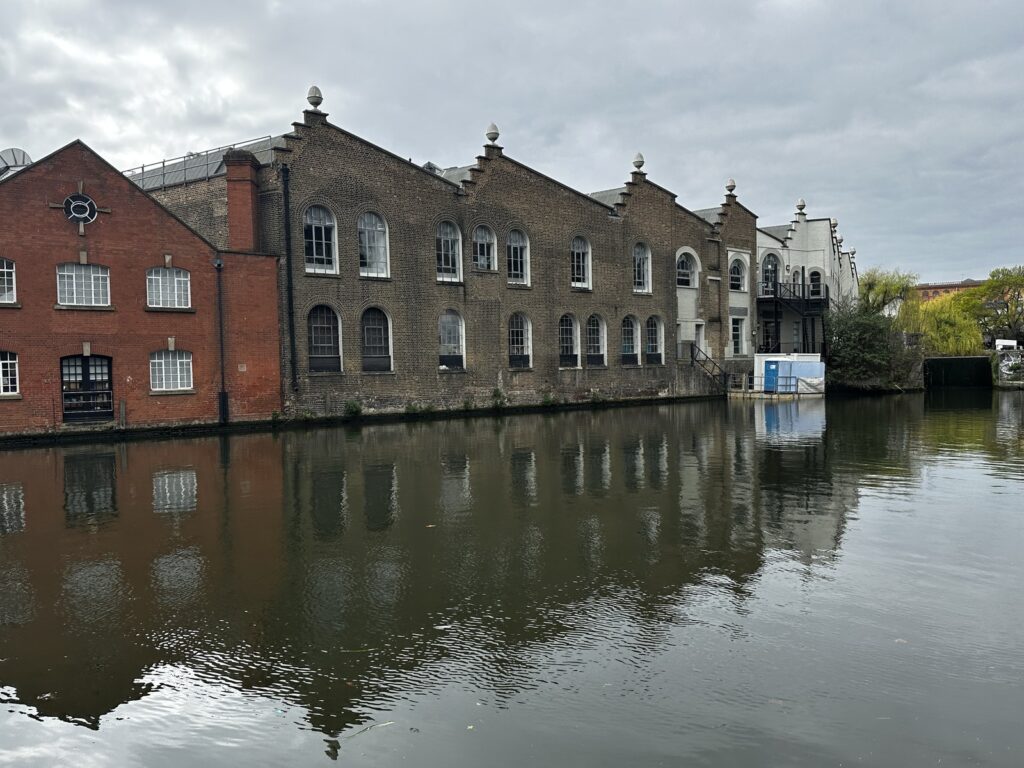
Image: The former TV-am Breakfast Television Centre on the Regent’s Canal in Camden, London, April 2026. Photo: Matt Brown, CC BY 4.0, via Wikimedia Commons.