When the gilded doors of 31 Rue Cambon open to welcome a new creative sovereign, the tremors are felt far beyond the arrondissements of Paris. On 12 December 2024, the fashion industry’s most intensely guarded secret was finally broadcast to the world: Matthieu Blazy had been appointed as the new artistic director of Chanel. Taking the reins of the haute couture, ready-to-wear, and accessories collections, the French-Belgian designer assumed one of the most formidable, heavily scrutinised mantles in modern luxury.
This appointment was not merely a change of personnel; it represented a profound philosophical pivot for the historic maison. For decades, Chanel has operated as an insular ecosystem, fiercely protective of its codes and deeply reliant on internal succession to maintain its equilibrium. Bruno Pavlovsky, Chanel’s president of fashion, signalled a decisive break from this tradition in the official press release, praising Blazy’s "audacious personality" and "innovative approach to creation." Pavlovsky’s words underscored a calculated, necessary risk: entrusting the legacy of Gabrielle "Coco" Chanel and Karl Lagerfeld to an outsider renowned for his intellectual rigour and technical subversion.
As Blazy’s tenure unfolds through the definitive collections of 2025 and 2026, his approach has already begun to dismantle the rigid monolithic identity of the Chanel woman, replacing her with a fractured, multifaceted vision of contemporary femininity. It is a transition that requires a cultural architect, beyond a talented designer, capable of bridging the chasm between archival reverence and modern urgency.
The Departure of Virginie Viard and the Weight of Karl Lagerfeld’s Ghost
To understand the sheer magnitude of Blazy’s appointment, one must first examine the complex landscape he inherited. His predecessor, Virginie Viard, stepped down after a tenure that, while commercially robust, was frequently scrutinised by cultural critics for its perceived creative safety. Viard was Lagerfeld’s closest collaborator for over thirty years - his self-described "right and left hand." When she took over following his death in 2019, her mandate appeared to be one of quiet stabilisation. She softened Lagerfeld’s high-octane, pop-culture theatricality, delivering collections that were pragmatic, youthful, and immensely profitable for the privately-owned company.
Yet, as the broader landscape of luxury shifted towards extreme craft and intellectual design, Chanel’s stylistic output under Viard began to feel occasionally unmoored from the cultural vanguard. The sacred codes - the bouclé tweed, the interlaced leather chains, the camellias, the two-tone slingbacks - remained ever-present, but risked appearing as mere pastiche rather than vital instruments of contemporary fashion dialogues.
Viard’s departure opened a vacuum that the industry desperately wanted filled by a visionary capable of moving the needle. Names were thrown around with reckless abandon across social media and broadsheets alike, but Blazy emerged as the ultimate choice precisely because he offered something Chanel desperately needed: a profound, almost obsessive understanding of technique divorced from gimmickry. He did not arrive at Rue Cambon to merely curate the archives; he arrived to dissect them.
From Bottega Veneta to the Heart of Paris: Blazy’s Trajectory
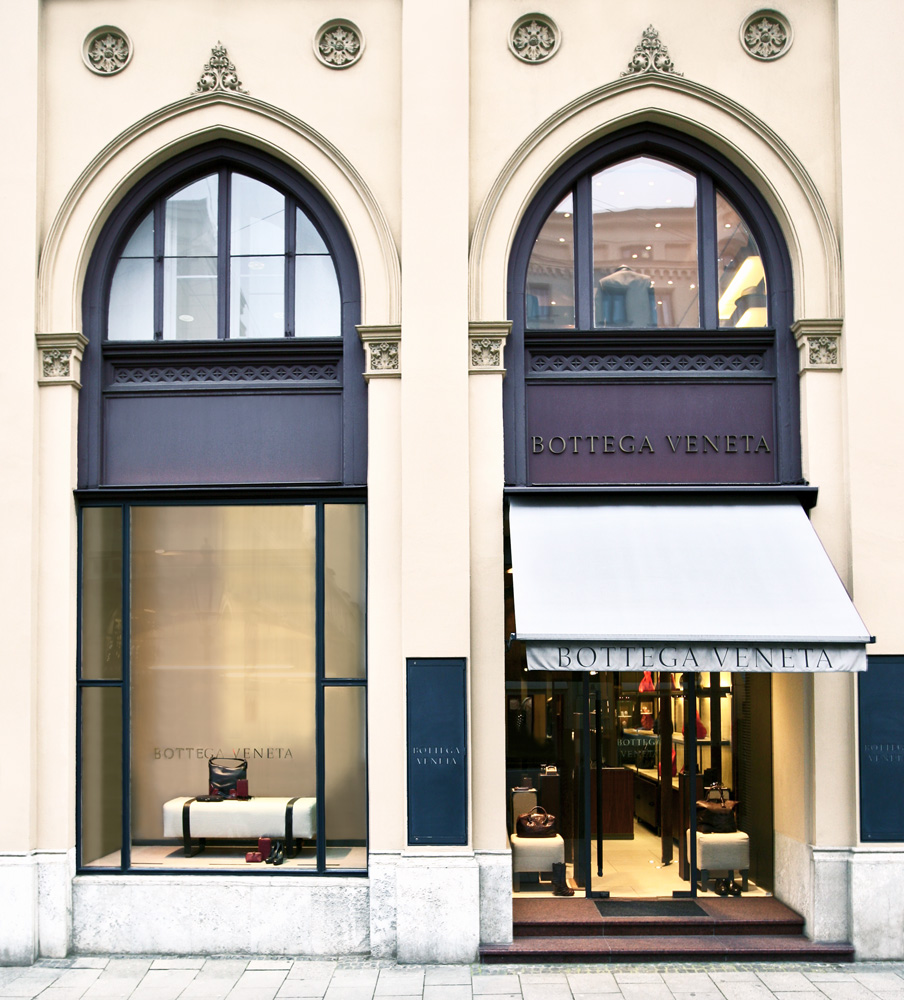
Blazy’s ascent to the apex of Parisian luxury is a masterclass in quiet dominance. Before stepping into the blinding, unforgiving spotlight of Chanel, he had already cemented his reputation as a "designer’s designer." His most recent triumph was at the helm of Bottega Veneta, where he transformed the Italian leather goods house with a philosophy he eloquently termed "craft in motion." There, he went viral not through logomania or celebrity stunt casting, but through breathtaking technical deception - most notably, his trompe l'oeil leather garments that masqueraded seamlessly as casual denim jeans and flannel shirts.
His pedigree is immaculate, reading like a history of 21st-century avant-garde fashion. Blazy cut his teeth working under Raf Simons, before moving to Maison Margiela, where he was famously "outed" by the late Suzy Menkes as the masked genius behind the brand’s highly acclaimed Artisanal line. He subsequently worked beneath Phoebe Philo during her era-defining tenure at Celine, and later returned to Raf Simons at Calvin Klein.
This rich, varied trajectory is vital context for his work at Chanel. Blazy has spent his entire career absorbing the intellectualism of Margiela, the emotional resonance of Simons, and the sharp, uncompromising modernism of Philo. He understands implicitly how to handle the heavy machinery of a global mega-brand without allowing the brand’s history to crush his own creative voice. At Chanel, a house built entirely on the supreme craftsmanship of its internal ateliers (the petites mains), Blazy’s obsession with material innovation has found its ultimate, most resourced playground.
The Spring/Summer 2026 Debut: A Cosmic Reimagining
The anticipation surrounding Blazy’s inaugural collection for the house was palpable, culminating in a Spring/Summer 2026 debut that fundamentally altered the Chanel trajectory. Departing entirely from the literal, grandiose thematic sets of the Lagerfeld era - the replica supermarkets, the towering rocket ships, the artificial beaches - Blazy opted for a deeply "poetic and cosmic staging." The focus was brutally wrenched away from the spectacle of the Grand Palais and thrust unequivocally back onto the garments themselves.
What emerged on the runway was a collection that sought to emancipate the Chanel silhouette from its historical constraints. For decades, the Chanel suit has been a somewhat rigid signifier of bourgeois elegance. Blazy approached it not as a sacred relic, but as raw sculptural material. "I thought that the Chanel aesthetic was somehow overshadowing the idea of women," Blazy noted candidly of his early observations of the house. "It was one woman, but I see many, many women."
To cater to this plurality, he engineered a masterclass in elegant deconstruction. The familiar tweed jackets were unspooled, tailored with sudden, sharp volumes, and paired with fluid, unexpectedly sheer lower halves that challenged the house’s traditional modesty. "I was interested in the artifice - to explode the silhouette and technique," he explained regarding his complex design process, adding a crucial caveat that defines his pragmatism: "but… when you decompose the silhouette you still have something quite wearable."
The collection notes reflected a deeply romantic, yet distinctly philosophical outlook. For Blazy, the true essence of the brand is not merely a catalogue of tweeds and interlocking Cs. "Chanel is about love," he stated in the show notes. "This is what I find most beautiful. It has no time or space; this is an idea of freedom."
Democratising Luxury: The New York Subway Métiers d’Art Collection
If his ready-to-wear debut proved his technical prowess, his approach to the Métiers d’Art collection demonstrated his staggering cultural audacity. The Métiers d’Art is traditionally Chanel’s most opulent annual showcase, designed specifically to highlight the staggering, centuries-old skills of its specialist ateliers, such as the feather workers at Lemarié, the embroiderers at Lesage, the shoemakers at Massaro, and the pleaters at Lognon. Historically, these shows have been staged in palatial, highly exclusive settings - from Scottish castles to sprawling Senegalese cultural centres.
In December 2025, Blazy dragged this zenith of haute craftsmanship deep underground, staging the Métiers d’Art show in a transformed New York City subway station. The juxtaposition was jarring, cinematic, and utterly brilliant. Models navigated the tiled platforms wearing garments that took thousands of hours to construct, their exquisite beadwork and intricate lacework contrasting violently with the utilitarian, grime-adjacent architecture of the municipal transit system.
The location was not merely an edgy aesthetic choice; it was a deeply political statement about the nature of modern luxury and visibility in an increasingly fractured world. "We all take the Metro," Blazy commented, robustly defending the unconventional venue. "It's chaotic, it's a mess… it erases social classes… it belongs to all of us." By placing garments of astronomical value within a thoroughly democratised public space, Blazy challenged the inherent elitism of haute couture, suggesting that true beauty should be robust enough to survive the harsh realities of urban transit.
The Complex Geometry of Gabrielle's Legacy
Navigating the pervasive ghost of Gabrielle Chanel is a perilous task for any designer. Her aphorisms are endlessly quoted, and her life story has been heavily commodified into a corporate mythology. Blazy, however, has approached her legacy with the analytical, critical eye of an archivist rather than the blind, unquestioning devotion of an acolyte.
In his collections, he has frequently leaned into the contradictions of Coco Chanel’s own philosophy. He explicitly referenced her famous historical reflection on fashion operating like a "caterpillar and a butterfly" - a profound metaphor for the necessary, continuous cycle of consumption, metamorphosis, and flight. It is a fitting analogy for Blazy’s own demanding methodology: he takes the heavy, terrestrial codes of the house and transforms them through sheer technique into something lighter, stranger, and infinitely more dynamic.
"Everybody knows or thinks they know what Chanel means, but it's way more complex," he remarked in a recent interview, pushing back against the oversimplification of the brand. This complexity is exactly what Blazy seeks to unravel. He acknowledges that Chanel was originally a radical, disruptive force - Gabrielle stripped away the suffocating corsets of the Belle Époque and introduced jersey, a fabric previously reserved for men's underwear, into high fashion. Blazy is attempting to recapture that authentic spirit of disruption, arguing implicitly that to truly honour Chanel’s legacy, one must be entirely willing to dismantle its current orthodoxies.
A Shift from Curation to True Creation
The appointment of Matthieu Blazy marks a watershed moment for Chanel and the wider architecture of Chanel's cultural impact and the global luxury market at large. In recent years, the industry has often favoured the "creative director as curator" - individuals highly skilled at styling, marketing, and generating viral digital moments, but perhaps far less adept at the brutal, demanding, deeply unglamorous craft of cutting a new silhouette.
Chanel has explicitly rejected this prevailing model. By hiring Blazy, the Wertheimer family - the fiercely private billionaires who own the company - have placed their immense faith back in the hands of a true couturier. In a cooling global luxury market where consumers are increasingly questioning exorbitant price points, Chanel has bet on the belief that buyers are ultimately seeking unimpeachable substance over fleeting spectacle, and that the long-term survival of a heritage house depends on continuous, rigorous aesthetic evolution.
Blazy’s Chanel is not a dusty museum of polite Parisian elegance, nor is it a hollow marketing exercise. It is a living, breathing, highly technical laboratory where history is routinely and violently interrogated. Through his complex fabrications, his outright rejection of the monolithic "Chanel woman," and his insistence on placing high craft in chaotic, democratic urban spaces, Matthieu Blazy has awakened the sleeping giant of Rue Cambon. The caterpillar has, once again, become the butterfly.